.jpg)

By using our website, you agree to the use of cookies as described in our Cookie Policy
Are Container Restaurants Easier to Relocate Than Traditional Buildings?
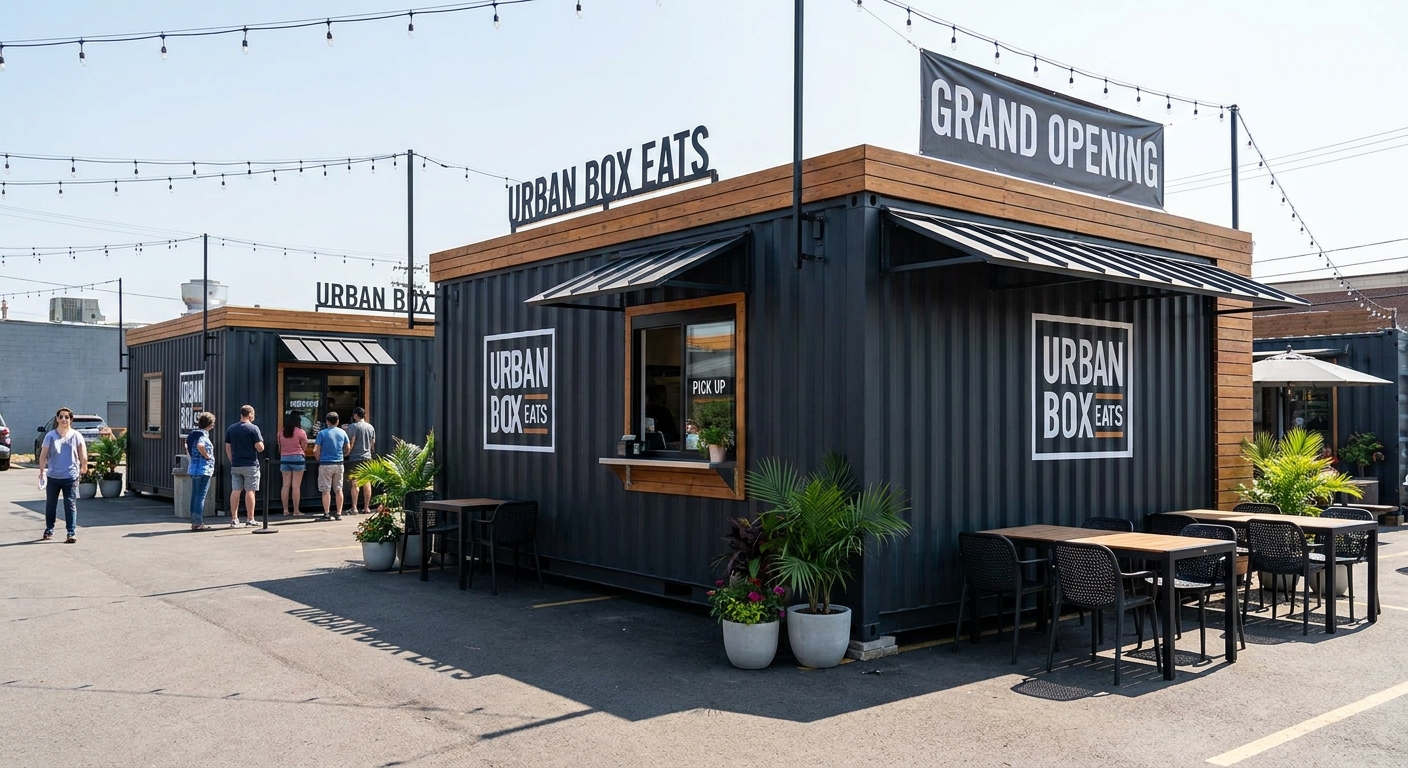
Most restaurant owners think about location like it's permanent. You sign a lease, build out the space, and hope the neighborhood stays hot. But the market doesn't care about your five-year plan. Foot traffic shifts. Rent spikes. And suddenly, that prime corner you locked down isn't so prime anymore. Container restaurants flip that script — because when the ground beneath you changes, you can actually pick up and move.
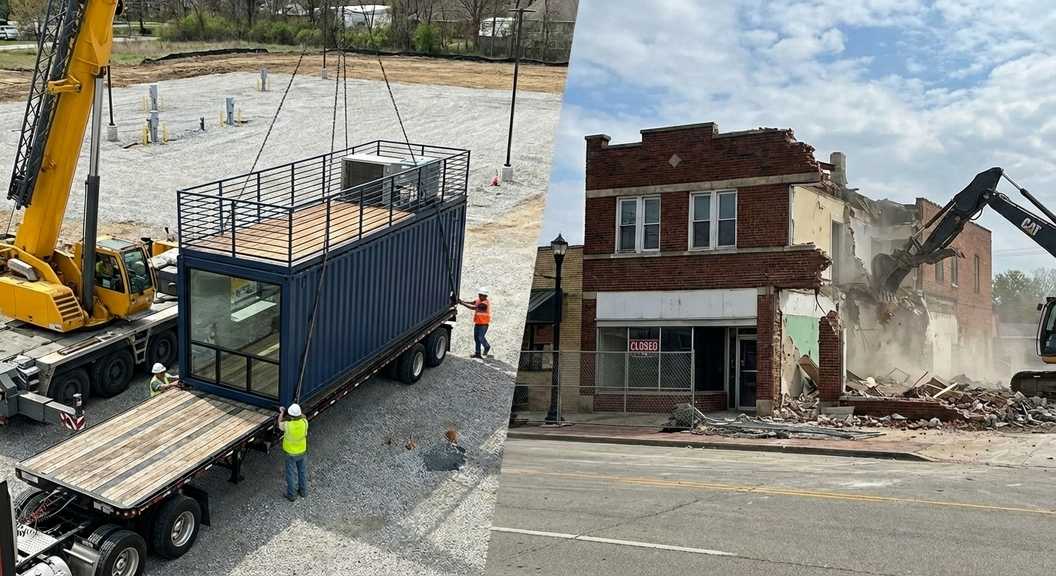
So here's the reality. If you're running a traditional build, relocation means demolition, permitting hell, and months of lost revenue. If you're in a container? You're looking at a crane, a flatbed, and maybe a week of downtime. The difference isn't subtle. It's the gap between starting over and staying in business.
Why Containers Were Built to Move
Shipping containers weren't designed for restaurants. They were engineered to cross oceans, stack six high, and survive storms that would flatten most structures. That durability translates directly into mobility. The steel frame that keeps cargo safe at sea also keeps your kitchen intact when it's time to relocate.
And because they're modular by nature, containers don't need the kind of foundation that locks a building in place. Most sit on concrete pads or adjustable piers — nothing that requires jackhammers or engineers to undo. That's not an accident. It's the entire point of the design. When your structure is built to be lifted, moved, and set down again, relocation stops being a nightmare and starts being logistics.
What Makes the Move Actually Work
Relocating a container restaurant isn't just theory. It happens. And when it does, the process looks nothing like moving a traditional building. Here's what makes it possible:
- The frame is already transport-ready, so you're not retrofitting a structure that was never meant to leave the ground
- Utilities disconnect cleanly because they were installed with mobility in mind, not buried in concrete
- Permitting is faster since you're placing a prefab unit, not constructing a new building from scratch
- Downtime shrinks to days instead of months, which means you're not bleeding cash while the doors stay closed
- Site prep at the new location is minimal — level ground, hookups, and you're back in business
Traditional Builds Weren't Made for This
Brick-and-mortar restaurants are exactly that — mortar, rebar, foundations that go deep. They're built to stay put. And when you try to move one, the structure fights you every step of the way. Walls come down. Plumbing gets ripped out. Electrical systems have to be completely redone.
Even if you wanted to salvage materials, most of it ends up in a dumpster. The cost isn't just financial. It's time, permits, inspections, and the very real risk that your new site won't even allow the same footprint or layout. By the time you're done, you've essentially built a new restaurant — and paid for two.
The Logistics Still Matter
Just because a container can move doesn't mean the process is effortless. You'll need a crane operator who knows what they're doing. You'll need a flatbed that can handle the weight. And you'll need to coordinate utility shutoffs and reconnections without leaving your equipment exposed to the elements.
Then there's zoning. Not every city treats container restaurants the same way. Some jurisdictions classify them as temporary structures. Others require full commercial permits. And if your new site has different setback rules or parking requirements, you might be back at square one. The point isn't that relocation is automatic — it's that the structure itself doesn't stand in your way.
Where the Real Advantage Shows Up
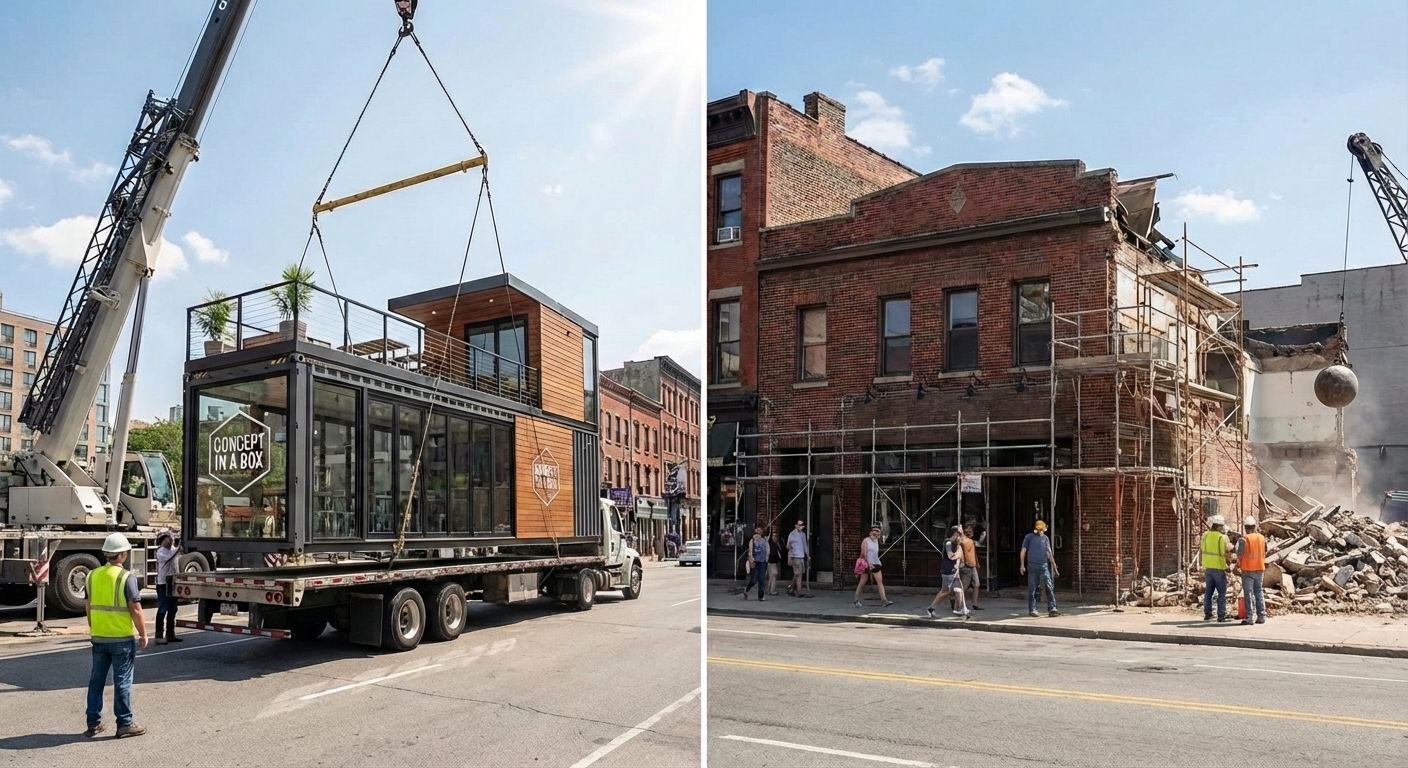
The flexibility of a container restaurant isn't just about moving when things go wrong. It's about moving when things go right. Maybe you started in a low-rent district and now you've got the capital to jump to a high-traffic zone. Maybe you're testing a concept in one market before expanding to another. Maybe your lease is up and the landlord wants double.
In every one of those scenarios, a traditional build forces you to choose between staying put or starting over. A container gives you a third option. And that option — the ability to adapt without losing everything you've built — changes the entire risk profile of running a restaurant.
What You'll Need to Pull It Off
If you're serious about relocating a container restaurant, the prep work matters. You can't just call a moving company and hope for the best. Here's what needs to be in place:
- A site survey at the new location to confirm access, clearance, and utility availability
- Permits lined up before the move, not after the container's already sitting on the lot
- A contractor who understands container modifications and can handle reconnections quickly
- Insurance that covers the move itself, not just the structure once it's in place
- A timeline that accounts for weather, equipment availability, and inspection schedules
When Mobility Becomes Strategy
Some restaurant owners see relocation as a last resort. Others see it as a competitive edge. Pop-up concepts, seasonal locations, event-based dining — all of these models work better when your building can follow the opportunity instead of waiting for it to come to you.
And in markets where real estate is volatile or overpriced, the ability to move isn't just convenient. It's survival. You're not locked into a lease that no longer makes sense. You're not stuck in a neighborhood that's declining. You're running a business that can pivot when the conditions demand it.
The Bottom Line on Portability
Container restaurants don't just look different. They operate differently. And when it comes to relocation, the gap between what's possible with a container and what's possible with a traditional build isn't small — it's the difference between flexibility and being stuck. The structure was designed to move. The foundation was designed to release. And the entire concept was built around the idea that location isn't forever.
That doesn't mean every container restaurant will relocate. But it does mean that when the market shifts, the rent jumps, or the opportunity knocks somewhere else, you've got options. Container architecture for restaurants offers modular structures for restaurants that provide affordable designs for new restaurant startups. And in an industry where most operators are locked in place, options are everything.
Ready to Make Your Move?
We know how important it is to keep your restaurant agile and ready for whatever the market throws your way. If you're considering a container restaurant or planning a relocation, let's talk about how we can help you stay ahead of the curve. Give us a call at 805-252-2701 or request a quote and let’s get your next location up and running with less downtime and more flexibility.
‹ Back
Recent Posts
-
Is a Shipping Container Retail Store Right for Seasonal Sales?
September 30, 2026
-
Can a Shipping Container Kitchen Help Your Business Grow?
September 16, 2026
-
When Does a Shipping Container Bar Make Sense for Your Business?
September 2, 2026
-
How a Shipping Container Restaurant Makes Expansion Easier
August 19, 2026
-