.jpg)

By using our website, you agree to the use of cookies as described in our Cookie Policy
Can a Shipping Container Restaurant Help Lower Overhead Costs?
Most restaurant owners think overhead is something you just accept. Rent, utilities, buildouts — all baked into the cost of doing business. But if you're willing to rethink what a restaurant can look like, shipping containers offer a real shot at slashing those numbers. Not by cutting corners, but by rebuilding the model from the ground up.
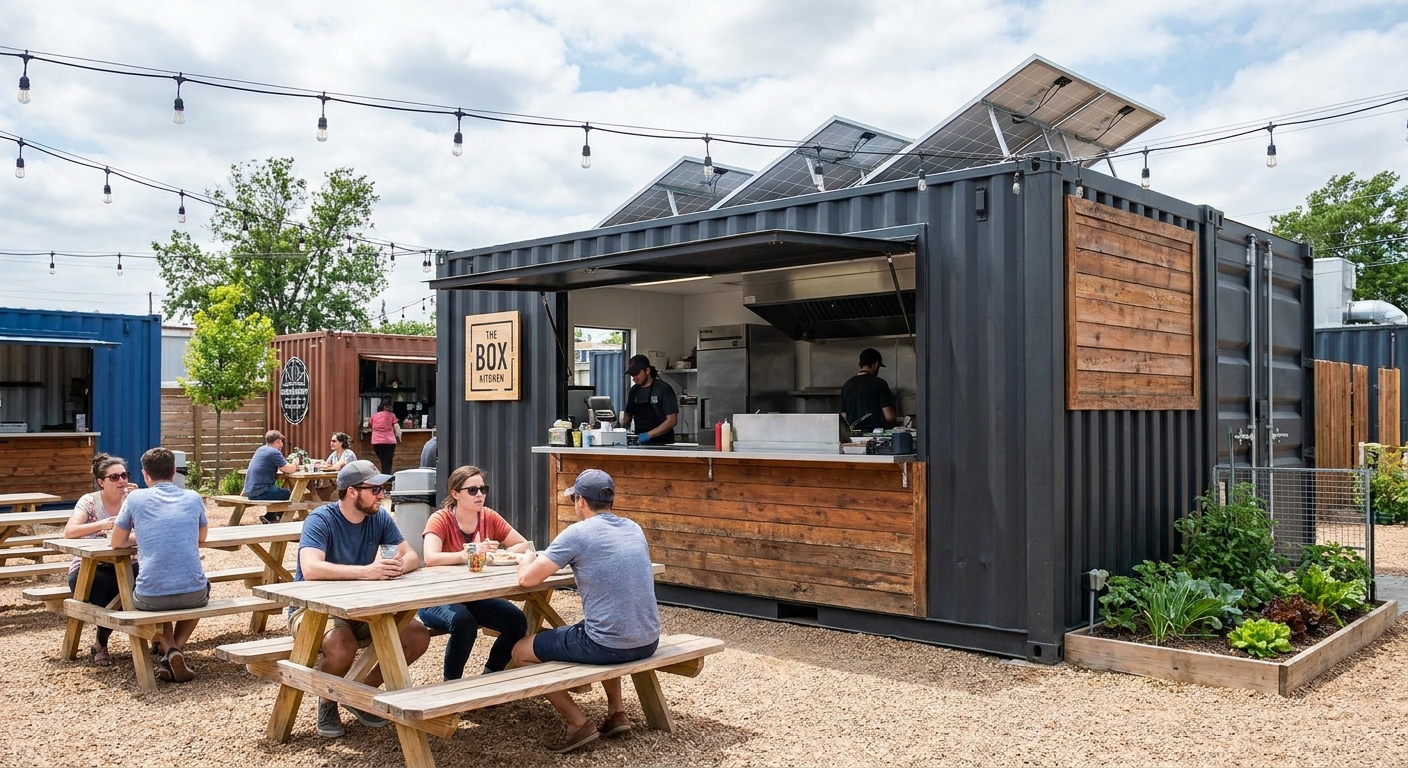
Steel boxes designed to cross oceans have become legitimate restaurant spaces. Some make it work brilliantly. Others find out the hard way that square footage isn't the only thing that matters. The key difference? Whether you plan around what shipping containers can actually do — or just treat them like trendy décor with four walls.
Upfront Spend Gets Slashed
Traditional restaurant buildouts drain cash fast. Lease deposits, contractor bids, permits that stack up like invoices — it adds up before you've served a single plate. A shipping container flips that script. You're buying the structure outright, often for less than a few months' rent in a commercial district.
Customization still costs money, but you're starting from a defined box with predictable dimensions. No surprises hiding in the walls. No asbestos removal or foundation repair. Just steel, space, and decisions about how to use it. That clarity alone keeps budgets tighter and timelines shorter.
Utilities Don't Eat Your Margins
Smaller footprint means smaller bills. Heating and cooling a shipping container takes a fraction of what you'd spend on a full storefront. Lighting costs drop. Water usage stays manageable. Every square foot you're not paying to condition is money that stays in your account.
Maintenance follows the same logic. Steel doesn't rot. It doesn't invite termites or spring leaks the way older buildings do. If you insulate properly and seal it right, you're looking at years of reliable structure with minimal upkeep. That's overhead you're not constantly fighting.
Key areas where shipping container restaurants save on utilities:
- Lower heating and cooling costs due to compact interior space
- Reduced lighting expenses with efficient LED setups
- Minimal water usage compared to large-scale kitchen facilities
- Durable steel construction that resists common building failures
- Option to integrate solar panels or other sustainable energy sources
Flexibility Keeps You From Getting Stuck
Traditional leases lock you in. Wrong location? Foot traffic dries up? You're still paying rent. Shipping containers give you an exit strategy. If a spot isn't working, you can move. If demand grows, you can stack or connect another unit. That kind of agility is rare in food service.
We've seen operators test markets without the usual risk. Pop up at an event, gauge response, then relocate or expand based on what actually happened — not what the lease term dictated. That's how you scale without overcommitting capital or space you can't fill.
Ways shipping containers offer operational flexibility:
- Portability allows you to test multiple locations without long-term leases
- Modular design lets you expand kitchen or seating areas as needed
- Ability to participate in food festivals, markets, or seasonal events
- Quick setup and teardown compared to permanent construction
- Lower financial risk if a location underperforms
Where the Model Hits Friction
Shipping containers aren't a free pass. Zoning boards don't always welcome them. Health departments want proof your setup meets code. Insulation, ventilation, and electrical work still require professionals — and if you cheap out, you'll pay for it in comfort or safety.
Space limitations force tough calls. You can't seat fifty people in a single twenty-footer. Your menu might need to shrink. Your kitchen layout has to be surgical. But constraints aren't always bad. Plenty of successful shipping container concepts thrive precisely because they narrowed focus and did a few things exceptionally well.
Common challenges when launching a shipping container restaurant:
- Local zoning regulations may restrict placement or usage
- Health department compliance requires proper ventilation and utilities
- Insulation and climate control demand upfront investment
- Limited interior space impacts seating capacity and menu complexity
- Permitting processes can vary widely depending on jurisdiction
Getting the Numbers Right
Want to know if a shipping container restaurant will actually lower your overhead? Run the math. Compare what you'd spend on a traditional lease, buildout, and monthly operating costs versus shipping container purchase, customization, and site fees. Factor in utilities, maintenance, and flexibility value.
Most operators who do this homework find significant savings — especially in high-rent markets. But it's not automatic. If you're planning to park in a premium district and still need full HVAC, permitting, and inspections, the gap narrows. The real wins come when you leverage what shipping containers do best: mobility, speed to market, and lower fixed costs.
Key cost comparisons to evaluate:
- Traditional lease deposits and monthly rent versus shipping container purchase price
- Buildout expenses for existing space versus shipping container customization
- Monthly utility bills for standard storefronts versus compact shipping container operations
- Ongoing maintenance and repair costs across both models
- Exit costs if you need to close or relocate
Proven Concepts Across Markets
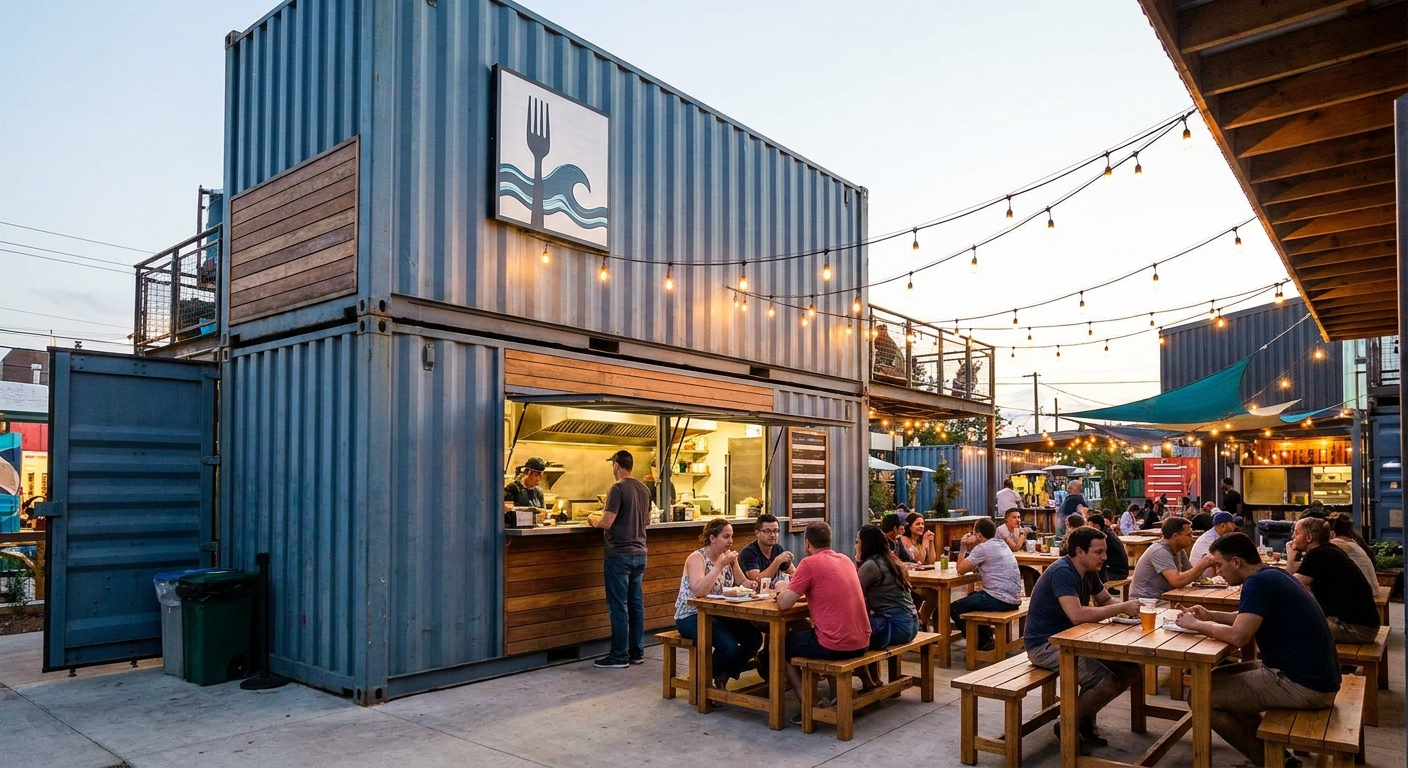
From food parks in Austin to beachside setups in California, shipping container restaurants are more than a gimmick. They're working. Owners report lower rent, faster launches, and the freedom to pivot without tearing up a lease. Many reinvest those savings into better ingredients, stronger branding, or additional units.
The model isn't for everyone. But if you're willing to plan smart, respect the constraints, and build around what shipping containers actually offer, the overhead savings are real. And in an industry where margins are tight and risks are high, that edge can make the difference between breaking even and breaking through.
What successful shipping container restaurants prioritize:
- Streamlined menus that fit compact kitchen layouts
- Strong branding that turns the shipping container aesthetic into a draw
- Strategic placement in high-traffic or underserved areas
- Investment in quality equipment and efficient workflow design
- Flexibility to adapt concept or location based on performance
Smart Moves With Steel Walls
Reducing overhead isn't about cutting quality. It's about rethinking structure. Shipping containers force that conversation from day one. You're not inheriting someone else's layout or paying for space you don't need. You're building exactly what your concept requires — and nothing more.
At BusinessCapital.com, we help restaurant owners fund these kinds of bold moves. Whether you're buying your first shipping container, outfitting a kitchen, or expanding to a second location, we understand what it takes to launch lean and grow smart. Call 877-400-0297 or apply online for same-day funding decisions that keep your vision on track.
Let's Build Your Next Restaurant, Smarter
We know that every dollar counts when you're launching or expanding a restaurant. If you're ready to explore how a shipping container setup could help you cut overhead and stay agile, let's talk through your options together. Give us a call at 805-252-2701 or request a quote—we're here to help you get started on the right foot.
‹ Back
Recent Posts
-
Is a Shipping Container Retail Store Right for Seasonal Sales?
September 30, 2026
-
Can a Shipping Container Kitchen Help Your Business Grow?
September 16, 2026
-
When Does a Shipping Container Bar Make Sense for Your Business?
September 2, 2026
-
How a Shipping Container Restaurant Makes Expansion Easier
August 19, 2026
-