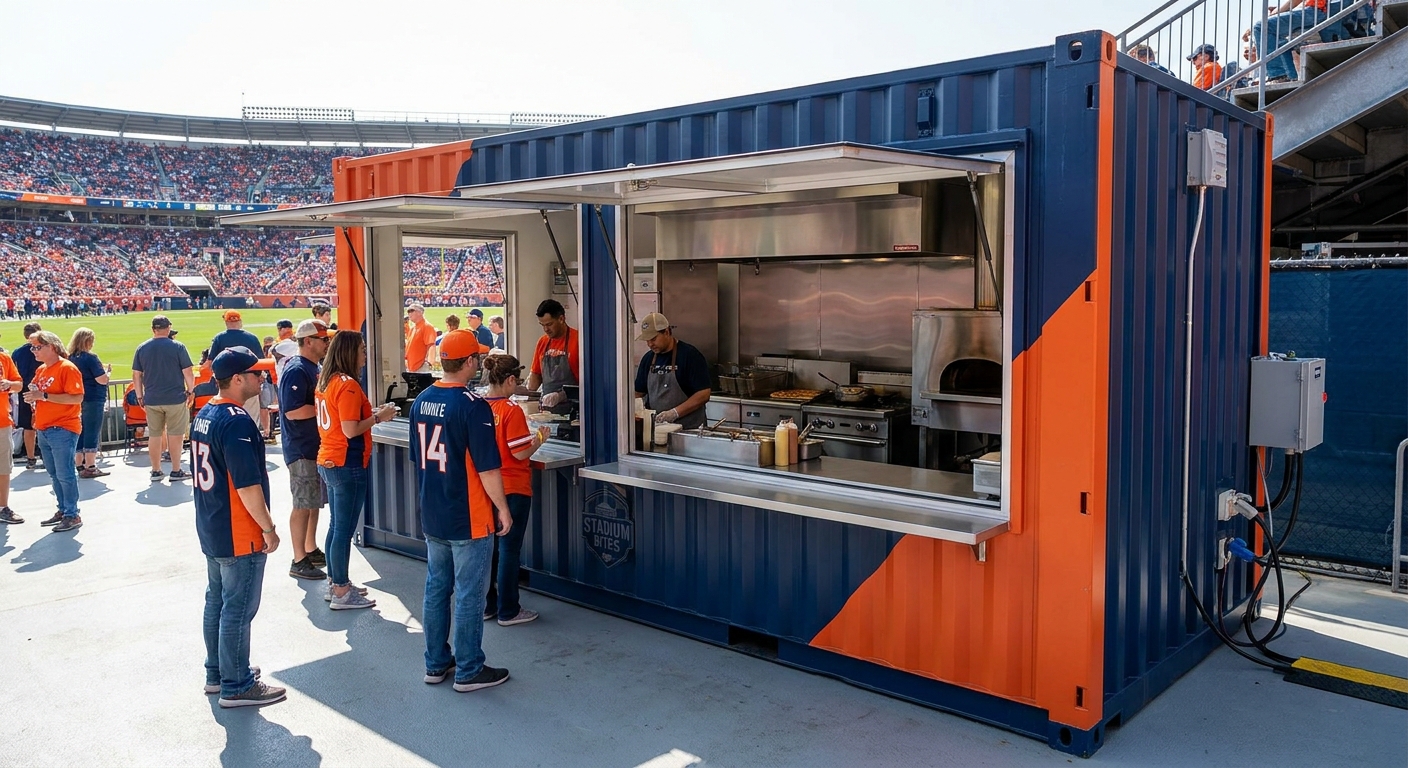
.jpg)

By using our website, you agree to the use of cookies as described in our Cookie Policy
Do Shipping Container Cafes Work Well in Busy Urban Areas?
Most entrepreneurs think shipping containers are just cheap boxes. Stack them, paint them, serve coffee. But urban real estate doesn't work that way — and if you're not thinking three moves ahead, you're burning cash on a concept that looked cool on Instagram. Shipping containers can carve out a footprint in tight spaces, sure. But surviving in a high-traffic district means more than aesthetics. It means zoning fights, permit battles, and proving you can pull customers when a Starbucks sits two blocks over.
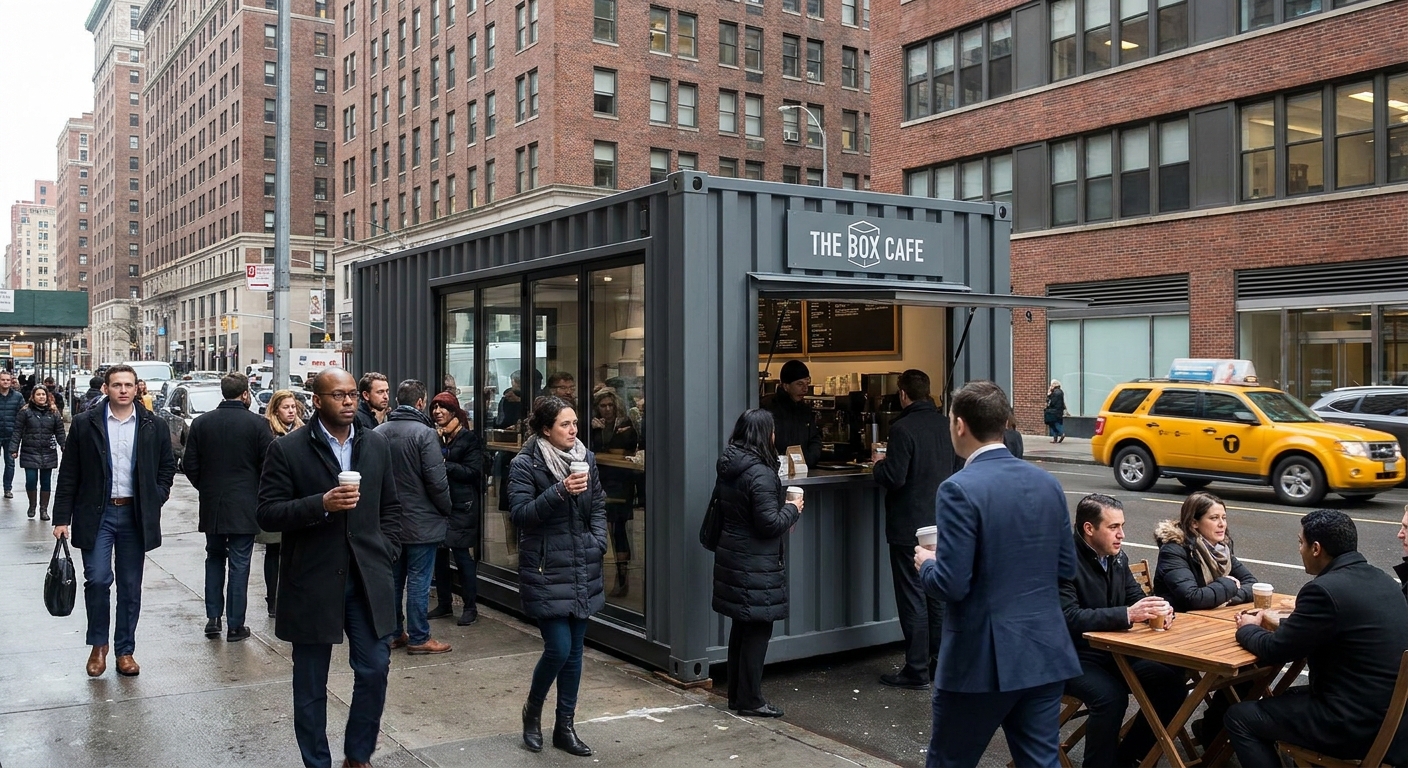
Here's what we've learned watching these setups succeed and fail. If you're eyeing a shipping container build for food service, the location matters more than the shipping container itself. Every permit should be locked down before you pour a foundation. Every design choice needs to serve function, not just vibe. And every dollar you save on construction better show up in how you handle foot traffic, because the city won't slow down for your learning curve.
When Space Is Scarce, Shipping Containers Fit Where Buildings Can't
Traditional storefronts demand square footage most cities don't have. Lease rates climb, buildouts drag on for months, and you're locked into a floor plan the day you sign. Shipping containers flip that script. They slide into gaps — corner lots, rooftops, alleys that sat empty for years. That modularity means we can test a location without committing to a decade-long lease or a six-figure retrofit.
But flexibility cuts both ways. If your district rezones or a developer buys the lot next door, you might need to relocate fast. That portability is an advantage only if you planned for it. Foundations, utilities, permits — they all need to be designed with mobility in mind. Otherwise, you're just building a cheap structure that's expensive to move.
Upfront Costs Look Good Until the City Gets Involved
A shipping container shell runs a fraction of what traditional construction demands. That's the pitch. But by the time you add insulation, HVAC, electrical upgrades, and city-mandated fire suppression systems, the budget starts looking familiar. We've seen operators underestimate those costs and end up stalled halfway through the build, unable to open because they didn't budget for compliance.
Operating expenses tell a similar story. Done right, shipping containers can be efficient — solar panels, low-profile utilities, compact equipment. Done wrong, you're heating and cooling a metal box in a climate that swings forty degrees between seasons. The savings only show up if you engineer for it upfront, not after your first summer with the AC running nonstop.
Foot Traffic Doesn't Care How Trendy You Look
Urban customers move fast. They want speed, consistency, and a reason to stop. A shipping container cafe with a clever design might pull Instagram tourists for a few weeks, but regulars need more than a photo op. That means nailing your menu, your service flow, and your hours. If you can't serve fifty people during the lunch rush because your layout chokes at twenty, the novelty wears off quick.
Community integration matters too. Shipping containers work best when they become a fixture, not a gimmick. Pop-up events, local partnerships, and consistent quality turn curiosity into loyalty. But if you're just another coffee spot with a shipping container facade, you're competing on the same terms as everyone else — and they've got more seating.
City Regulations Will Slow You Down or Shut You Down
Zoning codes weren't written with shipping container builds in mind. Some cities treat them as temporary structures, others as permanent commercial builds. That distinction changes everything — permitting timelines, inspection requirements, allowable uses. We've watched projects sit idle for months because the operator assumed "mobile" meant "exempt." It doesn't.
Health and safety standards hit just as hard. Fire exits, ventilation, accessible restrooms — the city doesn't care that your space is compact. You still need to meet code. And if your shipping container sits on a lot without proper utility hookups, you're looking at expensive infrastructure work before you even open the doors. Budget for red tape, or it'll eat your runway.
- Zoning approval can take weeks or months depending on the district
- Health permits require compliant kitchen layouts and waste systems
- Fire safety codes often mandate sprinklers and secondary exits
- ADA compliance applies even to small footprints
- Some cities require engineering sign-off on structural modifications
Climate Control Isn't Optional in a Steel Box
Shipping containers are built to withstand ocean crossings, not to keep humans comfortable. Steel conducts heat and cold brutally. Without serious insulation, your cafe turns into a sauna by July and a freezer by January. Customers won't return if they're sweating through their latte or shivering while they wait for their order.
Ventilation is just as critical. A small space packed with espresso machines, ovens, and bodies needs airflow. Cheap HVAC systems can't keep up, and windows alone won't cut it in a shipping container with limited openings. Factor in noise from exhaust fans and outdoor foot traffic, and you're managing acoustics too. We've seen setups where conversation became impossible because the operator skimped on soundproofing.
- Spray foam insulation is expensive but necessary for temperature stability
- HVAC systems need to be sized for metal structures, not wood-frame buildings
- Ventilation must handle cooking equipment and customer capacity
- Double-pane windows reduce heat transfer and noise
- Ceiling fans and strategically placed vents improve air circulation
Size Constraints Force Hard Choices
A standard shipping container gives you 160 square feet. A high cube might stretch that to 320. Either way, you're working with tight quarters. That limits seating, kitchen equipment, storage, and staff movement. Some operators solve this by expanding outdoors or stacking shipping containers, but both approaches add cost and complexity.
Menu limitations come next. You can't offer a full-service kitchen in a single shipping container without sacrificing counter space or storage. Most successful shipping container cafe concepts simplify — espresso, pastries, grab-and-go items. If you're trying to compete with full-menu competitors, the space will fight you at every turn. Know what you're building before you commit to the footprint.
- Counter layouts need to prioritize workflow over square footage
- Storage solutions often require vertical shelving or off-site inventory
- Seating capacity may be limited to outdoor areas or adjacent structures
- Equipment must be compact and multi-functional
- Staff breaks and back-of-house needs get squeezed in tight builds
Permits and Design Work Together or Against You
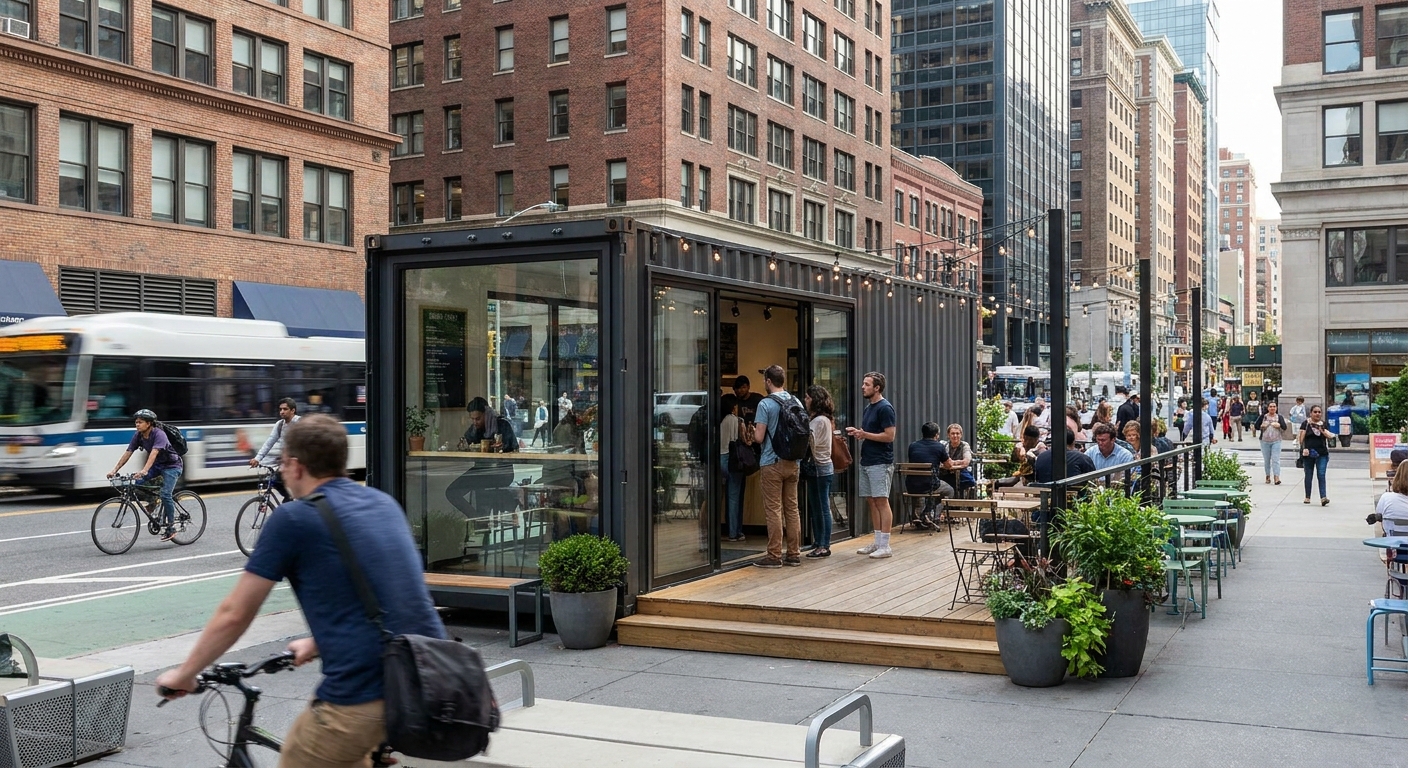
We've seen operators finalize their shipping container design, then discover the city won't approve it. That's backwards. Permitting should drive design, not the other way around. Talk to the zoning office before you buy the shipping container. Understand what's allowed, what requires variances, and what's a non-starter. Then design within those guardrails.
Engineering matters too. Some modifications weaken the shipping container's structural integrity. Cutting too many openings, removing corner posts, or adding unsupported roof decks can create safety hazards. Most cities require a structural engineer to sign off on significant changes. If you skip that step, you're gambling with inspections — and losing means costly rework or shutting down.
- Consult zoning and building departments before finalizing any design
- Hire a structural engineer for modifications beyond basic door and window cuts
- Plan for utility connections early — water, sewer, electric, gas
- Factor in inspection timelines when setting your opening date
- Keep documentation for every permit and approval in case of audits
Marketing Can't Fix a Bad Location
A shipping container cafe in the wrong spot is just an expensive box. Foot traffic, visibility, and access determine whether you survive. We've watched stunning builds fail because they sat a block too far from the main drag, or faced the wrong direction, or couldn't accommodate the morning rush because parking was a nightmare. Location research matters as much for shipping containers as it does for traditional cafes.
Visibility isn't just about being seen — it's about being understood. If passersby can't tell you're open, or what you're selling, or how to enter, they'll keep walking. Signage, lighting, and clear pathways make or break first impressions. A shipping container with a clever design but poor wayfinding is a wasted opportunity. Make it obvious, or foot traffic will pass you by.
- Study pedestrian patterns and peak traffic times before committing to a site
- Ensure visibility from multiple angles, especially for street-facing locations
- Test access routes for customers with mobility aids or strollers
- Lighting should make your space inviting after dark, not just functional
- Clear signage with hours and offerings reduces friction for first-time visitors
Shipping Containers Work When the Plan Matches the Reality
Shipping containers aren't a shortcut. They're a tool. Used strategically in dense urban areas, they solve real problems — tight budgets, scarce space, slow permitting cycles. But they amplify mistakes just as fast. Operators who skip due diligence, underestimate costs, or chase aesthetics over function end up with expensive failures.
The ones who succeed treat shipping containers like any other commercial build. They plan for permits, engineer for climate, design for workflow, and market with precision. When all those pieces align, a 40-foot shipping container cafe can hold its own in the busiest districts — not because it's trendy, but because it works. Explore how these cost-effective shipping container solutions can transform urban food service, and review our portfolio of completed projects to see real-world applications.
Ready to Launch Your Urban Shipping Container Cafe?
We've seen firsthand how the right planning and execution can turn a shipping container cafe into a thriving urban hotspot. If you're serious about making your mark in the city and want a team that understands every step from permits to design, let's talk. Call us at 805-252-2701 or Request A Quote to get started on your project today.
‹ Back
Recent Posts
-
Can a Shipping Container Kitchen Help Your Business Grow?
September 16, 2026
-
When Does a Shipping Container Bar Make Sense for Your Business?
September 2, 2026
-
How a Shipping Container Restaurant Makes Expansion Easier
August 19, 2026
-
-