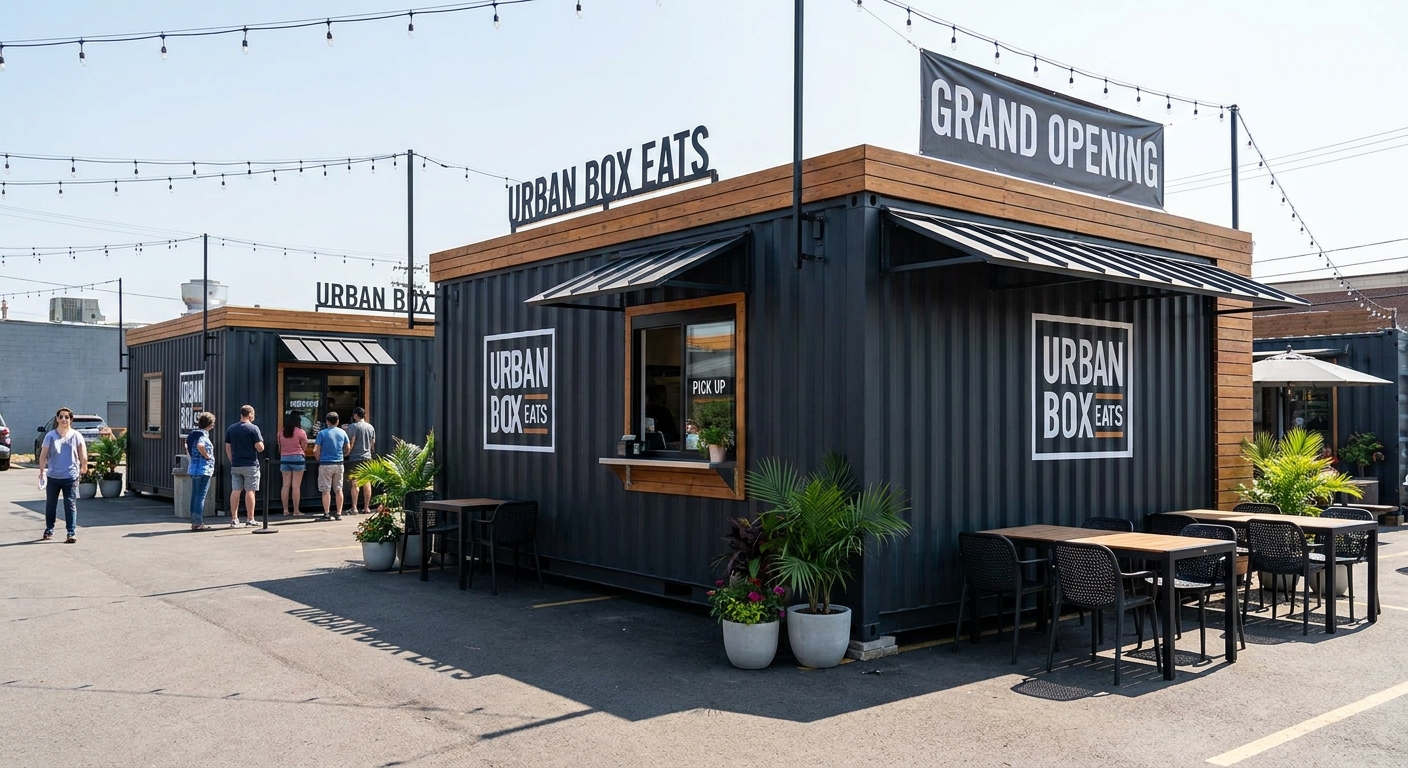
.jpg)

By using our website, you agree to the use of cookies as described in our Cookie Policy
How a Shipping Container Restaurant Makes Expansion Easier
Most restaurant owners treat expansion like a gamble. Big money upfront, long timelines, and a stack of permits that could crush your momentum before you even pour the first foundation. But there's a shift happening — one that's built on steel, speed, and the kind of flexibility that traditional construction can't touch. Shipping container restaurants aren't just trendy. They're tactical. And if you're serious about scaling without bleeding capital, they might be the smartest move you make.
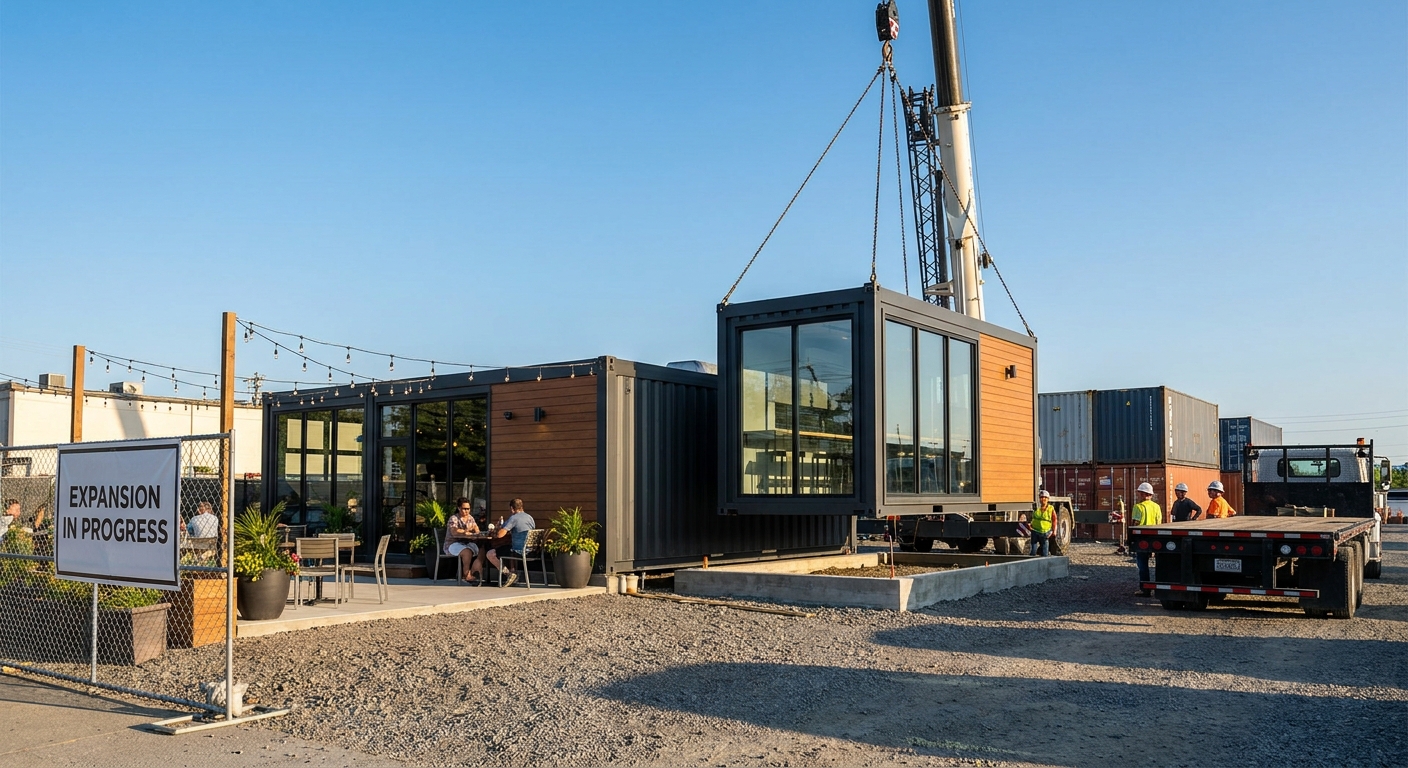
The whole game changes when your location can be built offsite, delivered on a flatbed, and operational in weeks instead of months. No drawn-out negotiations with contractors. No surprise costs when the drywall crew finds mold. Just a clean, modular framework that lets you focus on what actually matters — serving food and making money.
The Financial Barrier Just Got Lower
Traditional buildouts can drain six figures before you flip the first burger. Between leasing prime real estate, pulling permits, and dealing with construction crews who work on their own timeline, the cost of opening a second or third location becomes a massive roadblock. Shipping containers flip that script entirely. The box itself costs a fraction of what you'd spend on framing and foundation work, and the conversion process is streamlined because most of the heavy lifting happens in a controlled environment.
That lower threshold means we can test markets without betting the farm. It means franchisees or partners can get in the game without needing a small fortune. And it means the risk of expansion doesn't have to paralyze growth. When the upfront capital requirement drops, the entire calculus of scaling shifts in your favor.
Speed Wins in This Industry
Every week a new location sits idle is revenue left on the table. Traditional construction timelines stretch into months, sometimes over a year if you hit delays. Shipping container restaurants cut that down to a sprint. Because the structure is fabricated offsite, weather doesn't slow you down. Labor shortages don't derail your schedule. Inspections happen faster because there's less complexity to review.
We've seen container builds go from concept to opening in under eight weeks. That kind of speed lets you capitalize on hot markets, seasonal opportunities, or emerging neighborhoods before the competition even breaks ground. And when you can launch faster, you can also pivot faster if something doesn't pan out.
Built to Stack and Scale
The beauty of containers is in their modularity. Start with one unit for a compact footprint. Add a second for more seating or a full bar. Stack them for a multi-level dining experience. The design is inherently flexible, which means expansion doesn't require demolition or major structural overhauls. You're literally adding building blocks.
This approach works whether you're testing a new concept in a low-risk market or doubling down on a location that's already crushing it. You control the pace and the scale, and you're not locked into a permanent structure that's hard to modify. When growth is modular, it's also reversible — and that kind of agility is rare in this business.
- Single units for tight urban spaces or food truck alternatives
- Multi-container layouts for full-service dining with separate kitchen zones
- Stackable designs that maximize vertical space without major engineering
- Easy reconfiguration as customer flow or menu offerings evolve
- Portability that lets you relocate if the market shifts
Permits and Red Tape Get Easier
Zoning boards and city planners can be the death of expansion plans. Traditional restaurants face layers of approval, especially if you're altering existing structures or building in historic districts. Container restaurants often sidestep the worst of it. Many jurisdictions treat them as temporary or semi-permanent, which means fewer hoops to jump through and faster approvals.
We're not saying it's a free pass — you still need health department sign-off, fire inspections, and utility hookups. But the process is leaner. And in cities that are actively encouraging creative development or activating underused lots, container builds can get greenlit in a fraction of the time. That's a competitive advantage when timing is everything.
- Classified as temporary structures in many markets
- Faster permitting timelines compared to traditional construction
- Less restrictive zoning in certain urban or industrial areas
- Easier to secure approval for pop-up or seasonal use
- Lower scrutiny on structural modifications due to prefab nature
Sustainability Sells and Saves
Reusing decommissioned shipping containers isn't just good optics — it's smart economics. These boxes were built to survive ocean crossings and decades of abuse. Repurposing them into restaurants keeps them out of scrap yards and reduces the demand for new construction materials. Pair that with solar panels, reclaimed wood finishes, and energy-efficient HVAC, and you've got a concept that resonates with eco-conscious diners.
But sustainability isn't just a marketing angle. Lower energy costs, reduced waste, and streamlined supply chains all add up to better margins. And when your brand story includes environmental responsibility, you're not just attracting customers — you're building loyalty that lasts beyond the next food trend.
- Repurposed containers reduce construction waste and material demand
- Energy-efficient systems lower operating costs over time
- Green certifications can unlock grants or tax incentives
- Eco-friendly branding appeals to younger, value-driven consumers
- Lower carbon footprint compared to conventional restaurant builds
Mobility Opens New Revenue Streams
Containers move. That's not a quirk — it's a feature. If a location underperforms, you're not stuck with a lease and a sunk cost. You can relocate. If there's a festival, concert series, or seasonal event, you can drop in and capitalize on the traffic. Mobility turns your restaurant into a tactical asset instead of a fixed liability.
Pop-up concepts, rotating locations, and event partnerships all become viable when your entire operation can hitch to a truck. We've seen operators dominate summer beach towns, then move inland for fall markets. That kind of flexibility doesn't exist with brick-and-mortar, and it's a huge advantage when consumer behavior shifts or competition heats up.
- Relocate underperforming units without losing your investment
- Tap into seasonal demand with temporary placements
- Participate in high-traffic events without permanent overhead
- Test new markets before committing to long-term leases
- Adapt to urban development changes or rezoning without starting over
Branding Gets Consistent and Memorable
Containers have a look. Industrial, modern, bold. That aesthetic is recognizable, and it's repeatable. Whether you're opening your second location or your twentieth, the core design can stay consistent while still allowing room for local customization. Customers know what to expect, and that consistency builds trust — especially when you're expanding into new markets where brand recognition is low.
The visual impact also works in your favor. A well-designed container restaurant design stands out in a crowded marketplace. It photographs well, it generates buzz on social media, and it signals that you're doing something different. In an industry where differentiation is everything, that edge matters.
- Distinctive design that's easy to replicate across locations
- Strong visual identity that enhances brand recall
- Customizable exteriors for local flavor without losing cohesion
- High social media shareability drives organic marketing
- Modern, trend-forward aesthetic appeals to younger demographics
Expansion That Doesn't Break You
Growth is supposed to fuel your business, not drain it. Shipping container restaurants give us a path to scale that's faster, cheaper, and smarter than what traditional construction allows. The barriers are lower, the timelines are shorter, and the flexibility is real. Whether you're launching your first satellite location or rolling out a multi-market strategy, containers let you move with confidence instead of caution.
At the end of the day, expansion is about control. Control over costs, timelines, and risk. Shipping containers for restaurant franchising put that control back in your hands — and that's the kind of advantage that turns ambitious plans into actual profits.
Ready to Take the Next Step?
Scaling your restaurant shouldn't be a gamble. With shipping container builds, we can move quickly, keep costs in check, and adapt as your business grows. If you're ready to explore how this approach can work for your next location, let's talk about your goals and map out a plan together. Call us at 805-252-2701 or request a quote to get started on your expansion journey.
‹ Back
Recent Posts
-
Is a Shipping Container Retail Store Right for Seasonal Sales?
September 30, 2026
-
Can a Shipping Container Kitchen Help Your Business Grow?
September 16, 2026
-
When Does a Shipping Container Bar Make Sense for Your Business?
September 2, 2026
-
How a Shipping Container Restaurant Makes Expansion Easier
August 19, 2026
-