.jpg)

By using our website, you agree to the use of cookies as described in our Cookie Policy
Is a Shipping Container Retail Store Right for Seasonal Sales?
Seasonal retailers think the hardest part is timing the market. Getting in before the rush, pulling out before the slowdown. But the real challenge is locking down a storefront that doesn't bleed capital during the off-season. Traditional leases stick you with fixed costs long after the crowds disappear. Shipping containers? They move when you move — and that changes the game entirely.
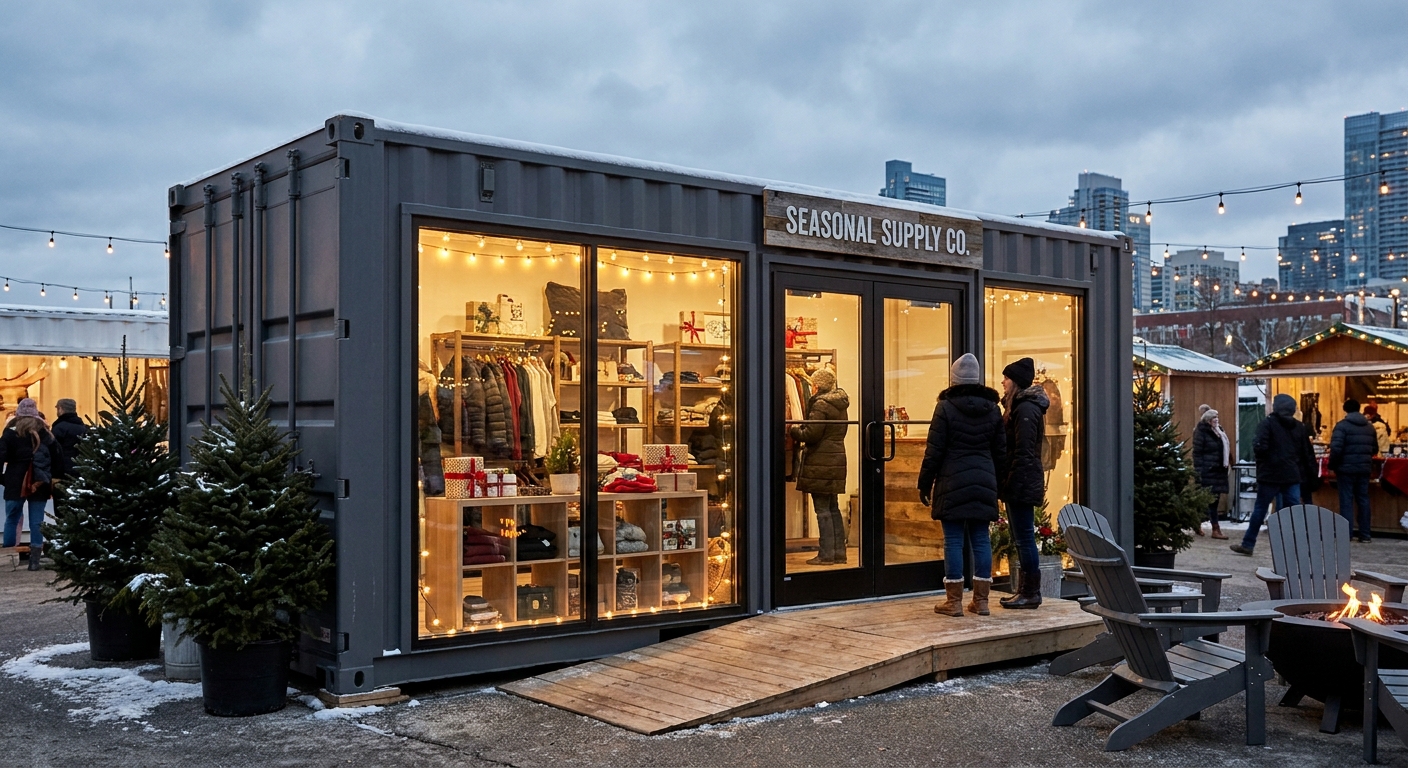
So here's what matters. If you're selling hard during peak months and going dark the rest of the year, you need infrastructure that flexes with demand. Containers give you that. But only if you're honest about the tradeoffs. Space is tight. Permits aren't automatic. And you'll need more than a steel box to make the setup work — you'll need power, climate control, and a plan that holds up under real conditions.
When Mobility Becomes Your Biggest Asset
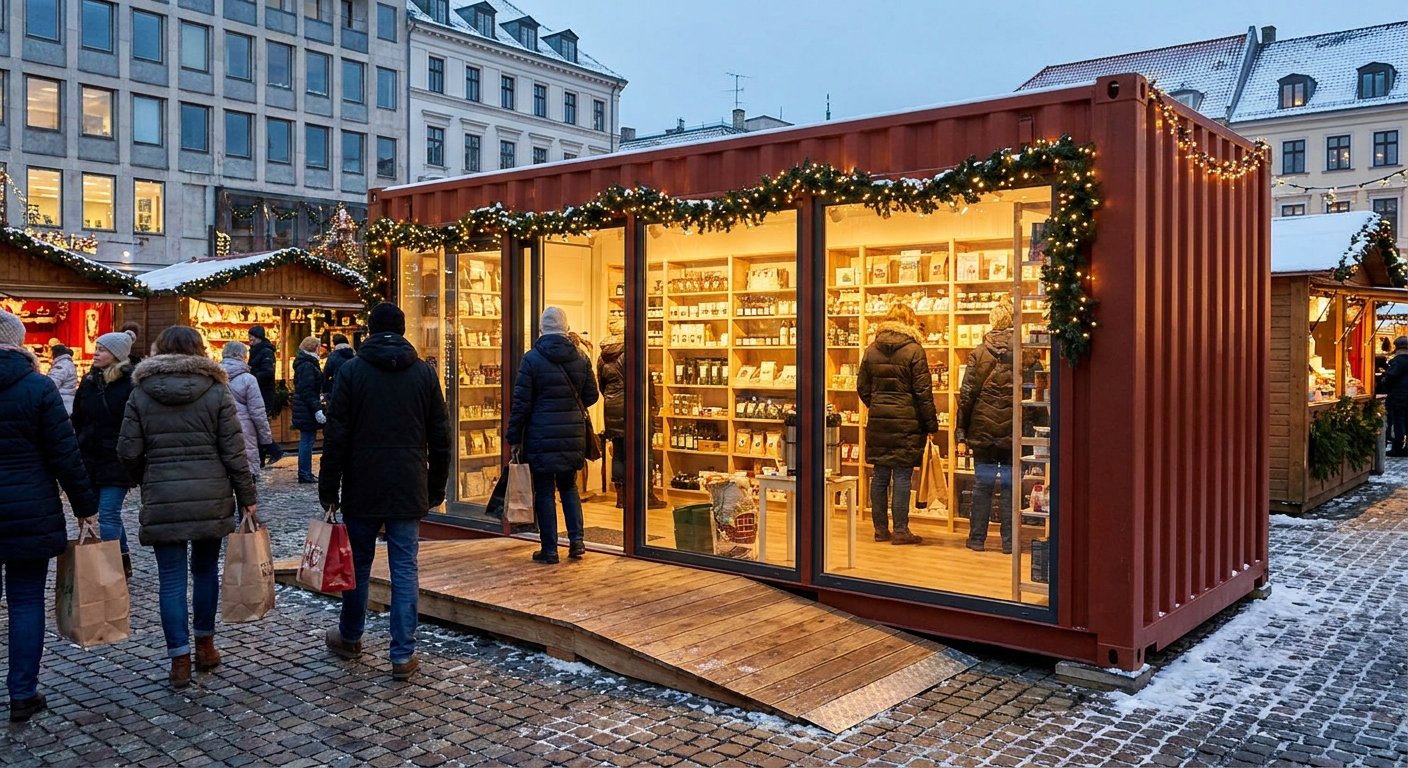
Most retail spaces anchor you to one address. That's fine if foot traffic stays consistent year-round. But seasonal businesses live and die by location shifts. Summer beach crowds, holiday markets, festival circuits — the money moves, and your store needs to follow.
Containers let you chase opportunity without renegotiating leases or abandoning deposits. Set up where demand peaks, then relocate or store the unit when the season ends. That kind of agility doesn't just cut costs — it opens revenue streams that fixed storefronts can't touch. You're not stuck hoping customers find you. You're setting up where they already are.
The Math Works When Overhead Drops
Leasing traditional retail space for a few months is brutal math. Landlords want annual commitments. Buildouts cost real money. Utilities run nonstop whether you're open or not. By the time you factor in deposits, insurance, and monthly rent, the profit margin shrinks fast.
Containers flip that equation. Upfront costs are lower. Maintenance is minimal. And when the season wraps, you're not burning cash on an empty storefront. That savings doesn't just protect your bottom line — it frees up capital for inventory, marketing, and the kind of operational moves that actually drive sales. You're funding growth, not landlords.
Setup Speed Matters More Than You Think
Seasonal windows are narrow. If you're scrambling to get a store ready while competitors are already ringing up sales, you've already lost ground. Containers for temporary retail can be delivered, customized, and operational faster than traditional builds. We're talking days, not months.
Here's what that speed unlocks:
- You can pivot based on real-time demand instead of betting months in advance
- Branding, shelving, and lighting get installed without waiting on contractors
- Permits and inspections move faster when the structure is pre-fabricated
- You're open for business while others are still negotiating lease terms
- Mistakes get corrected without derailing your entire launch timeline
Green Credentials That Actually Matter
Sustainability isn't just marketing fluff anymore. Customers notice. Investors care. And municipalities increasingly favor low-impact retail solutions. Repurposing industrial containers keeps tons of steel out of scrap yards and eliminates the waste tied to new construction.
You can layer in solar panels, LED lighting, and recycled fixtures without massive upfront expense. That's not virtue signaling — it's a legitimate competitive edge when your target audience values environmental responsibility. And when local governments start offering incentives for sustainable builds, you're positioned to benefit instead of scrambling to retrofit.
Square Footage Is Your First Constraint
Containers aren't warehouses. Standard units run 20 or 40 feet, and interior space shrinks once you add insulation, walls, and fixtures. If your product line requires sprawling displays or heavy foot traffic flow, you'll hit limits fast.
But constraints force creativity. Vertical storage, modular shelving, and smart merchandising turn tight quarters into curated experiences. Some brands make the compact footprint part of the appeal — exclusive, intentional, focused. Others stack or connect multiple containers. The key is knowing your inventory needs before you commit, not after you're trying to cram stock into corners.
Permits Aren't Automatic
Drop a container on a lot and assume you're open? That's a fast track to fines and shutdowns. Zoning rules vary wildly by city and county. Some municipalities treat containers as temporary structures with lighter requirements. Others classify them as permanent builds subject to full code compliance.
Here's what you'll need to verify:
- Zoning approval for your intended location and business type
- Building permits if you're adding plumbing, electrical, or structural modifications
- Fire safety inspections, especially if you're operating near crowds or in enclosed areas
- ADA compliance if your container is accessible to the public
- Temporary use permits if you're only operating seasonally
Climate Control Costs Add Up
Steel boxes trap heat in summer and turn frigid in winter. Without proper insulation and HVAC, you're creating a miserable shopping experience — and customers won't stick around long enough to buy anything. Running climate control off-grid or in remote locations requires generators, battery banks, or hookups to local utilities.
Budget for insulation upfront. Factor in energy costs if you're running air conditioning or heaters for extended hours. And if you're setting up in extreme climates, test your systems before opening day. A sweaty or freezing customer is a lost sale, and word spreads fast when the environment inside your store is unbearable.
Utilities Require Planning
Power, water, and internet don't magically appear. If you're setting up in a parking lot, fairground, or beachside strip, you'll need to arrange connections — or run off independent systems. That means coordinating with property owners, utility companies, or investing in off-grid solutions like solar and water tanks.
Here's what matters most:
- Electrical hookups for lighting, POS systems, and climate control
- Reliable internet for card processing and inventory management
- Water access if you're selling food, beverages, or need restroom facilities
- Waste disposal agreements if local services don't cover temporary structures
- Backup power sources in case grid access fails mid-season
Design Drives Customer Experience
A bare metal box won't cut it. Your container needs to reflect your brand, welcome customers, and guide them through a seamless shopping experience. That means thoughtful design — not just slapping a logo on the side and calling it done.
Lighting sets mood. Shelving dictates flow. Signage attracts attention. Flooring impacts comfort. Every detail either enhances or undermines the environment you're creating. And because containers are modular, you can test layouts, swap fixtures, and refine the setup between seasons without tearing down walls or losing your investment.
Security Can't Be an Afterthought
Portable structures are tempting targets. Containers lock securely, but windows, vents, and access points create vulnerabilities. If you're operating in high-traffic or unsupervised areas, you'll need cameras, alarms, and possibly on-site security depending on inventory value.
Here's how to protect your setup:
- Heavy-duty locks on all entry points
- Security cameras with remote monitoring
- Motion-activated lighting around the perimeter
- Inventory tracking systems to catch shrinkage early
- Insurance coverage specific to temporary or mobile retail structures
When Containers Make the Most Sense
Not every seasonal business needs a container. If you're selling lightweight goods at indoor markets or operating out of a vehicle, containers might be overkill. But if you're moving serious inventory, need secure storage, or want a branded physical presence that commands attention, they're hard to beat.
Containers work best when mobility, speed, and cost control matter more than square footage. They're ideal for businesses that rotate locations, operate in high-visibility zones, or want to test new markets without long-term commitments. If that describes your model, retail containers aren't just an option — they're a strategic advantage.
The Real Test Is Execution
Shipping containers don't guarantee success. They're tools, not magic bullets. The businesses that win with containers are the ones that plan logistics, secure permits, design smart interiors, and execute cleanly from setup to teardown. The ones that fail treat containers like shortcuts — and get burned by the details they ignored.
If you're serious about seasonal retail, pop-up retail in container spaces gives you flexibility that traditional leases never will. But only if you're willing to sweat the setup, manage the tradeoffs, and build a model that works as hard as you do. Companies like retail brands using container stores understand that container builds that reduce costs require no shortcuts, no assumptions — just smart infrastructure that moves with your business instead of holding it back.
Let’s Build Your Seasonal Retail Success
We know how important it is to have a retail space that adapts to your business, not the other way around. If you’re ready to take control of your seasonal sales and want a container solution that’s as flexible as your ambitions, let’s talk about what’s possible. Call us at 805-252-2701 or request a quote today and let’s create a retail setup that works on your terms.
‹ Back
Recent Posts
-
Is a Shipping Container Retail Store Right for Seasonal Sales?
September 30, 2026
-
Can a Shipping Container Kitchen Help Your Business Grow?
September 16, 2026
-
When Does a Shipping Container Bar Make Sense for Your Business?
September 2, 2026
-
How a Shipping Container Restaurant Makes Expansion Easier
August 19, 2026
-